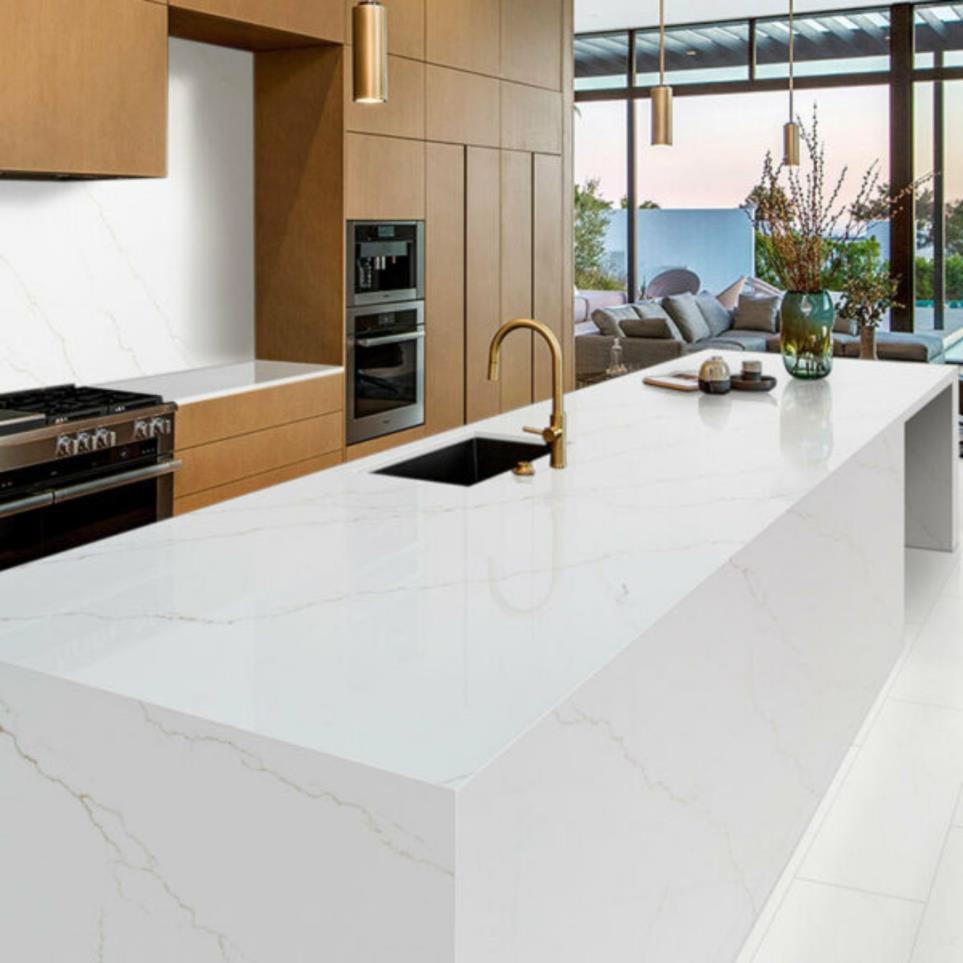
Few countertop materials stop a homeowner mid-scroll the way marble countertops do. The veining, the cool white tones, and the sense of weight and permanence — marble carries a visual authority that no engineered surface has fully replicated.
For Countertops Springfield, marble remains a standout option. However, the same homeowners who love the look often talk themselves out of it, based on fears that are partially true, partially exaggerated, and in some cases completely wrong.
Affordability, durability, and maintenance concerns can complicate decisions. With proper sealing and care, marble remains resilient in kitchens, baths, and other high-traffic areas, making it a compelling choice for discerning homeowners.
In fact, this blog tests those fears directly — including leaving red wine on marble for 24 hours to see exactly what happens.
The 24-hour red wine test on a marble surface — what the countertop looks like before, during, and after.
What Makes Marble Countertops Worth Considering
Marble is a metamorphic rock formed when limestone undergoes intense heat and pressure deep within the earth. That process creates the crystalline structure and sweeping veining that makes each slab genuinely one of a kind. Moreover, the veining — those lines of gray, gold, or rose — forms from mineral impurities that moved through the stone over millions of years. No two slabs share exactly the same pattern.
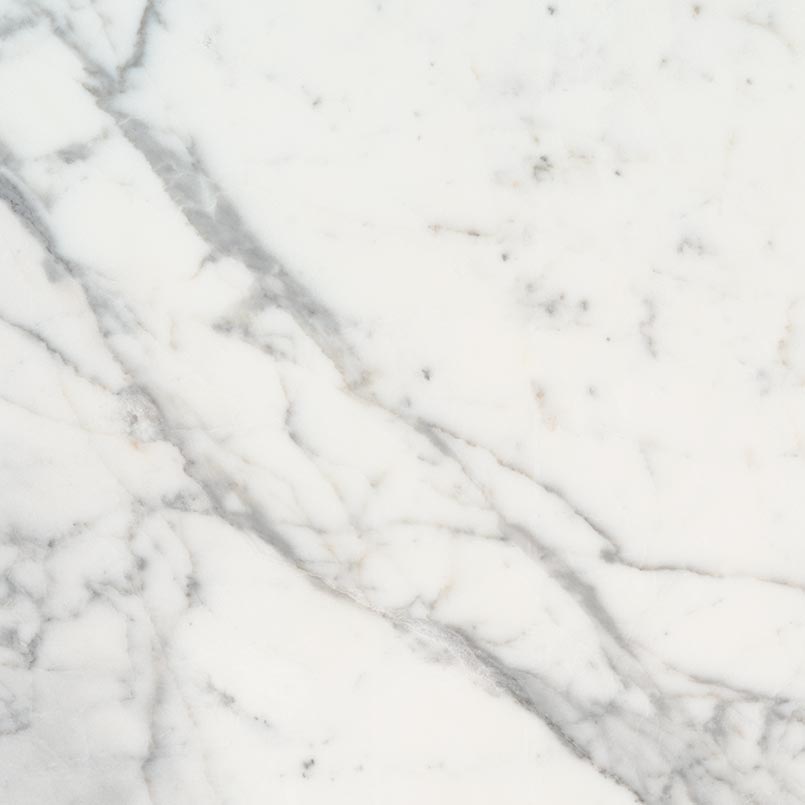
In a kitchen or bathroom, marble countertops deliver a look that reads as elevated without trying to imitate anything. Calacatta marble brings bold, branching veins against bright white. In contrast, Carrara marble offers softer gray movement against a warmer base. Nero Marquina runs the opposite direction — deep black with crisp white veining. Furthermore, the honed finish option transforms the surface from high-gloss to a matte, silky texture that reads more casual and shows fewer fingerprints.
The concern is never with the appearance. Durability is always the real question.
[ IMAGE — three marble slab samples side by side in showroom lighting: white Calacatta, soft gray Carrara, deep black Nero Marquina ] alt: “marble countertops variety Calacatta Carrara Nero Marquina slab samples side by side” Left to right: Calacatta, Carrara, Nero Marquina — three of the most requested marble varieties, each with a distinct character.
5 Myths About Marble Countertops — Busted
Misconceptions about marble fall into a predictable pattern: some are completely false, some are true but overstated, and one — the wine stain question — is exactly as serious as the test below confirms.
Myth 1: Marble is too delicate for a working kitchen.
Reality: Marble has been used as a working kitchen surface for centuries. Although it is softer than granite or quartz, it does not crack or fail under normal kitchen use. Moreover, surface scratches on a honed finish tend to blend in rather than stand out — which is why many professional bakers specifically prefer honed marble for pastry work. The real concern is chemical, not structural.
The Wine Test: What Really Happens
Myth 2: Red wine won’t stain sealed marble.
Reality: This is the one every marble homeowner needs to understand clearly. Red wine left on marble for 24 hours will stain — even on a sealed surface. The images below show exactly what that looks like.
[ BEFORE IMAGE — marble countertop surface before red wine test: clean, smooth white marble with no marks or discoloration, close-up shot ] alt: “marble countertops before red wine stain test clean white surface no marks” Before: the surface is clean, smooth, and completely unmarked at the start of the 24-hour test.
[ AFTER IMAGE — same marble surface after 24 hours of red wine contact: visible red stain and dulled surface finish at the wine contact point ] alt: “marble countertops after red wine stain 24 hours visible red mark dulled surface finish” After: 24 hours of contact leaves a visible red stain and noticeably dulls the surface finish at the contact point.
Ultimately, sealing slows absorption — it does not stop it entirely. Additionally, the longer a spill sits, the deeper it travels into the stone. Yet a wine spill wiped up within minutes is unlikely to cause lasting damage. Consequently, the practical rule is clear: clean spills as they happen, particularly anything acidic or pigmented.
Three More Myths — Answered Directly
Myth 3: Marble needs resealing every few months.
Reality: For most kitchen applications, marble needs resealing approximately once per year — not every season. For instance, a simple water drop test tells you when the time has come: if water beads on the surface, the seal holds. If the water absorbs within a few minutes, resealing is due. Furthermore, applying a quality penetrating sealer takes under an hour and requires no professional — most homeowners handle it themselves.
Myth 4: All marble looks roughly the same.
Reality: Marble varies more dramatically than almost any other natural stone. Calacatta varieties produce bold, architectural veining in thick sweeping lines. Carrara produces finer, more uniform movement across a softer white base. Some quarries yield marble with gold or amber tones; others produce deep green, rose, or nearly pure white slabs. In addition, the finish — polished, honed, or brushed — changes the surface character entirely. Homeowners who assume marble “all looks the same” have typically seen one variety in one finish.
Myth 5: A stain means the countertop is permanently ruined.
Reality: Many marble stains can be drawn out using a poultice — a paste of absorbent material and a mild chemical agent that pulls the stain back through the surface as it dries. However, results depend on how long the stain has sat and how deeply it has penetrated. A stain caught within the first hour is far more forgiving than one left for 24 hours. In short, “permanently ruined” is rarely the outcome — “requires effort to correct” is closer to the truth.
Marble Countertop Care — The Real Rules
Understanding the myths clears the way for practical guidance. Marble countertops reward attentive habits and punish neglect — but attentive does not mean burdensome.
Daily Habits
Countertops Springfield benefit from prompt spill cleanup.
Wipe spills immediately, particularly wine, coffee, citrus juice, and vinegar.
These spills are acidic or pigmented and can stain marble over time.
Use a soft cloth and a pH-neutral cleaner.
Avoid bleach, ammonia, and generic sprays, since many contain acids that etch the surface and dull polish.
Avoid cutting directly on marble. The surface scratches at cut edges, and while honed finishes absorb minor scratches invisibly, polished marble will show them. A cutting board used consistently costs nothing and protects the surface indefinitely.
Long-Term Upkeep
Reseal the surface annually using a penetrating stone sealer. Apply it when the water drop test shows absorption. Additionally, for kitchen islands or prep zones with heavy daily use, a mid-year inspection is worthwhile — high-traffic areas may reach the resealing threshold sooner than lower-use runs. Overall, the annual sealing commitment is the primary maintenance cost of marble ownership, and it is a manageable one.
Frequently Asked Questions About Marble Countertops
Are marble countertops practical for a family kitchen?
Marble works in family kitchens for homeowners who follow the care habits consistently — wipe spills immediately, avoid harsh cleaners, and reseal annually. Specifically, the wine test above shows what happens when that rule breaks down. Families who want the natural stone look with less day-to-day vigilance may find quartzite a better fit — it is harder, more stain-resistant, and closer to marble in appearance than any engineered alternative.
How does marble compare to quartz for kitchen countertops?
Quartz countertops are engineered to be non-porous, which means they resist staining without sealing and require no periodic maintenance beyond routine cleaning. Moreover, many quartz lines now closely replicate the look of Calacatta and Carrara marble. However, quartz lacks the natural depth, translucency, and veining variation that makes real marble distinctive. The choice comes down to how much that difference matters to you versus how much the maintenance requirement matters.
Can marble be used in a bathroom vanity as well as a kitchen?
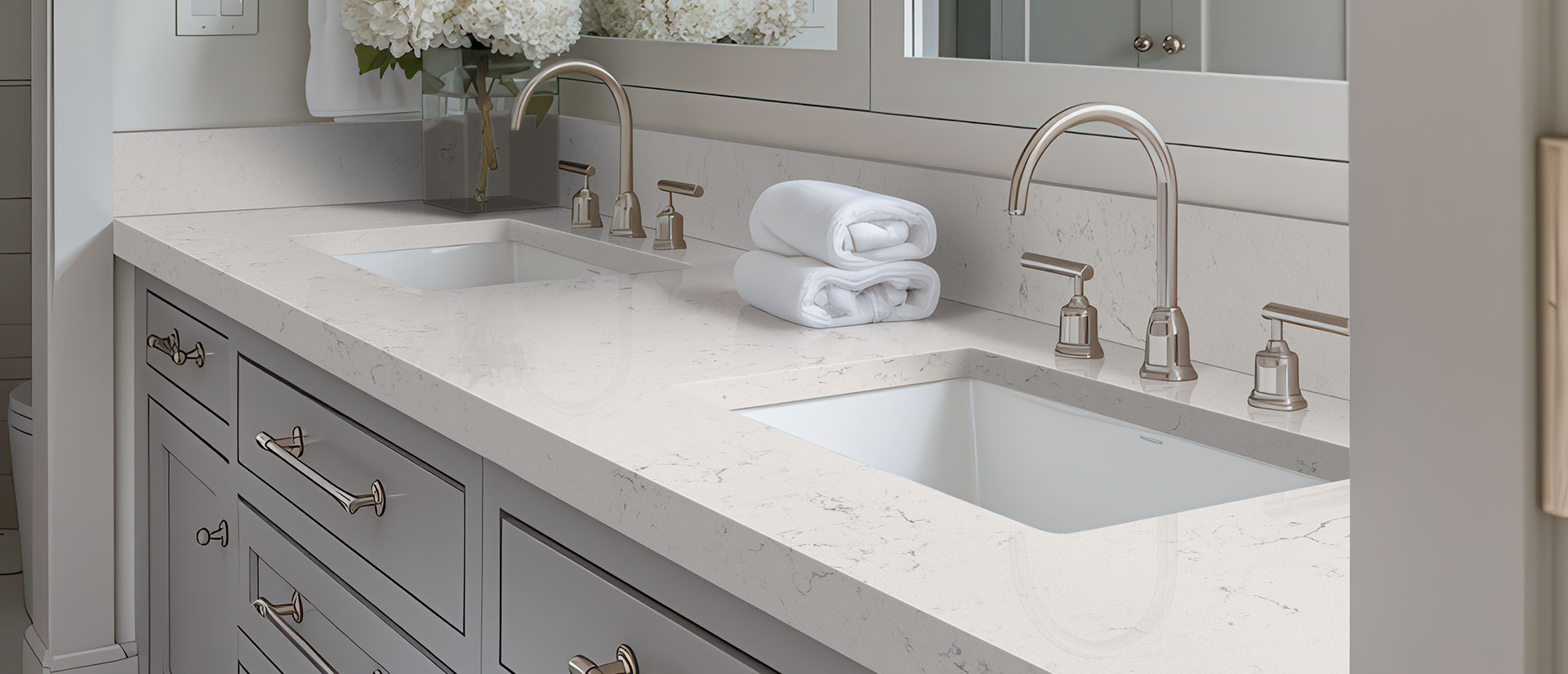
Yes — and in many ways the bathroom is where marble performs at its best. Bathrooms see less acidic exposure, fewer food spills, and lower daily impact than kitchens. Consequently, marble bathroom vanities hold up beautifully with the same care habits that would demand more discipline in a high-traffic kitchen. The project gallery shows several completed marble bathroom installations across Central Illinois.
Marble Is Worth It — If You Go In Clear-Eyed
Marble countertops are not the right choice for every homeowner or every kitchen. They reward the people who go in knowing the full picture: aware of the staining risk the wine test confirms, committed to the care habits that protect the surface, and genuinely drawn to a look that no other material has matched in three thousand years of use.
See the full marble selection at Modern Countertops, browse the project gallery to see completed marble kitchens and bathrooms across Central Illinois, and get a quote when you are ready to move forward.