Most homeowners spend weeks choosing their stone and a few minutes choosing the edge. That order deserves to be reversed. Countertop edge profiles shape how the surface feels to the touch, how thick the slab appears in the room, and how much maintenance the edge demands over the years.
At Modern Countertops, three profiles come up in nearly every client conversation. These are the styles Central Illinois homeowners request most — each one with a distinct look, a distinct personality, and a distinct use case.
Countertop Edge Profiles: Why the Detail Defines the Design
A countertop edge is the part of the surface you interact with most. Every time you pull out a bar stool, wipe down the island, or lean against the counter, you are in contact with the edge — not the field of stone. Furthermore, the profile determines how thick your slab appears, how light plays across the surface, and how forgiving the edge is when a hip or elbow catches it at the wrong moment.
Getting this decision right is simpler than most homeowners expect. Modern Countertops’ edge profiles gallery shows the full range of available options. However, three consistently rise to the top of every consultation — and understanding what makes each one distinct is the fastest way to know which one belongs in your home.
The Three Edges Clients Request Most
The Pencil Edge — Soft, Refined, Endlessly Versatile
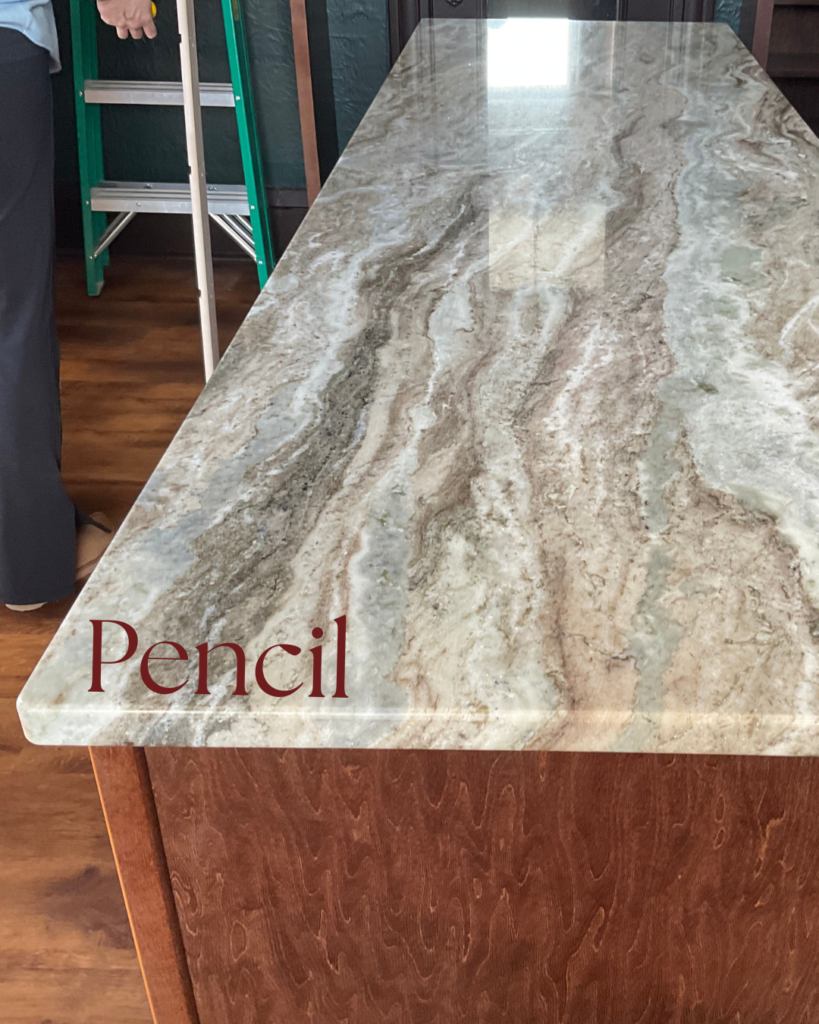
The pencil edge introduces a soft, rounded curve along the top corner of the countertop. It is not a full bullnose — the bottom stays flat — but the curved top edge gives the slab a finished, refined quality that the sharper eased edge does not quite achieve.
Because the curve is subtle, the pencil edge suits almost every design direction. In a minimalist kitchen with flat-panel cabinetry, it reads contemporary; in a warmer, more layered interior, it softens without looking out of place. Moreover, the rounded profile catches light in a way that emphasizes the stone’s natural coloring — particularly effective on dramatic quartzite or marble with strong veining.
Why homeowners choose the pencil edge:
- Softer than eased without committing to a full rounded bullnose
- Comfortable to rest hands and forearms on throughout the day
- Works equally well on kitchen islands, perimeter counters, and bathroom vanities
- Light-catching curve adds refinement to any slab, quiet or bold
Even so, the pencil edge keeps the design understated. Homeowners seeking a bold visual statement from the edge itself often pair this profile with a highly patterned stone, letting the material create the drama while the edge stays clean.
The Eased Edge — Geometric, Modern, Low-Maintenance
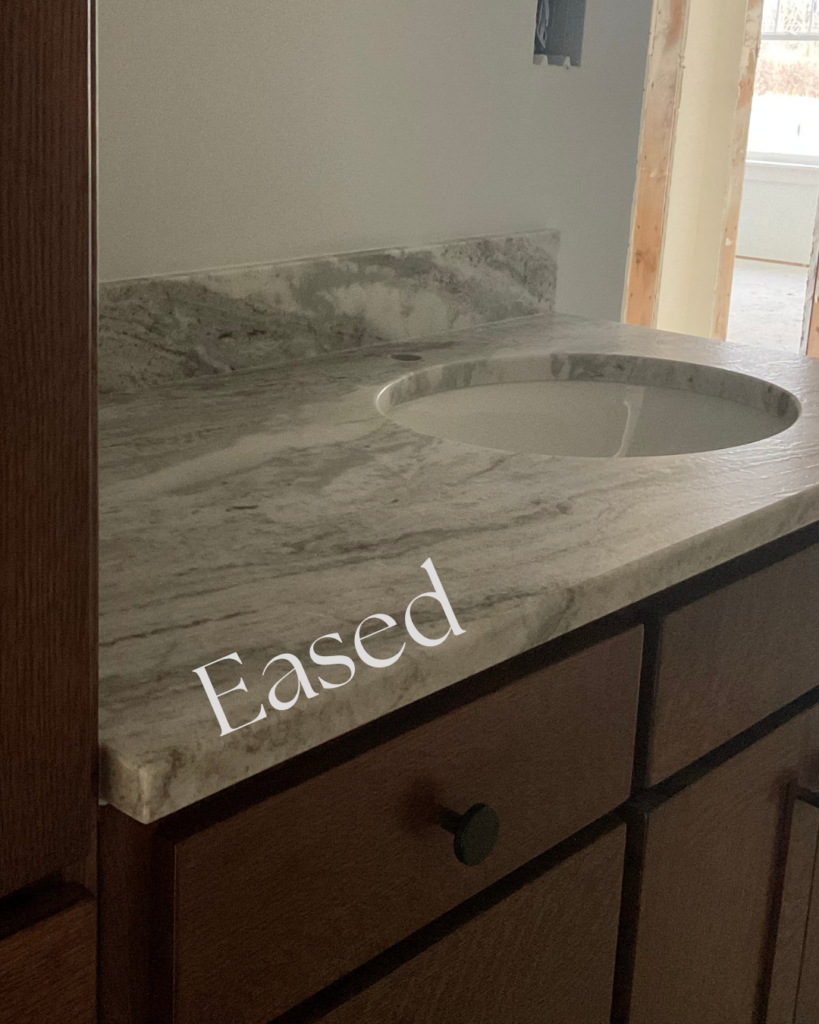
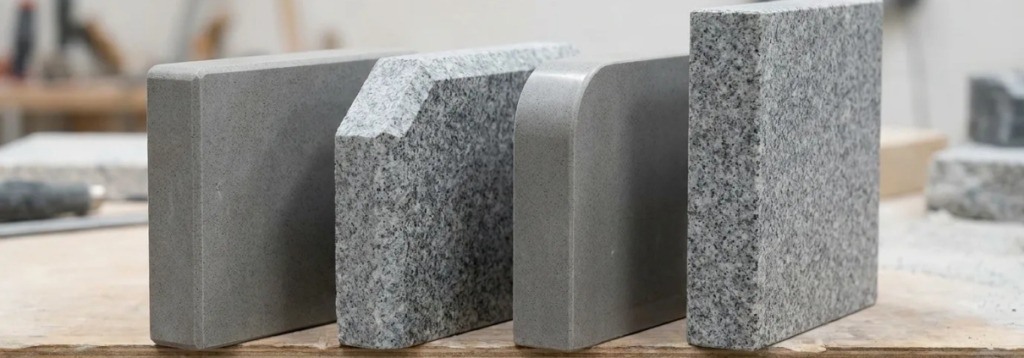
The eased edge removes the sharp 90-degree corner from the countertop with a minimal radius — typically around 1/8 inch — on both the top and bottom. At a glance, it reads nearly flat and straight. Up close, those softened corners eliminate the sharpness of a true square edge while keeping the geometric, linear look intact.
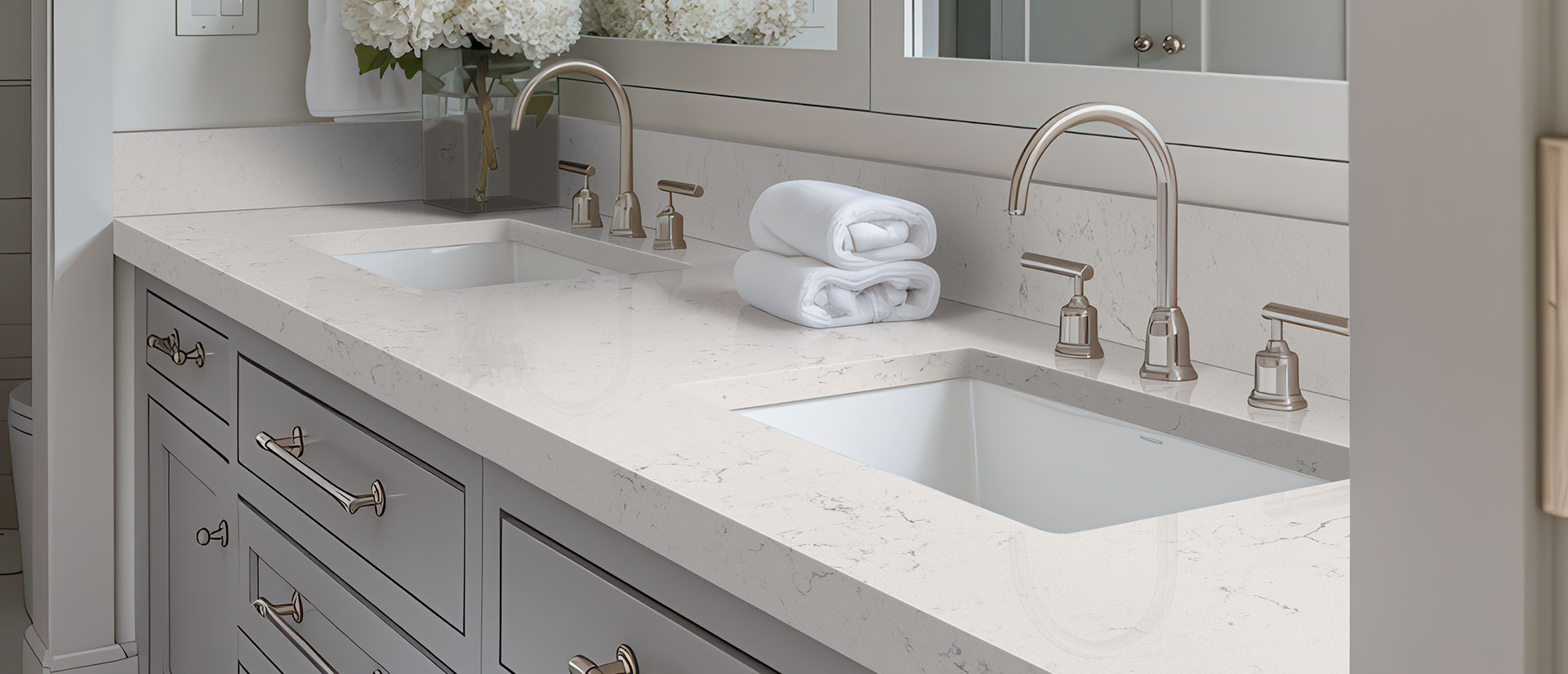
In fact, this is the most-requested profile in American kitchens today. Consequently, it works across every material — granite, quartz, marble, quartzite, porcelain — without competing with the stone’s natural pattern. Additionally, the tight, minimal profile means fewer grooves and recesses where grime can accumulate, making the eased edge one of the simplest surfaces to keep clean.
Why homeowners choose the eased edge:
- Suits contemporary, transitional, and Shaker-style kitchens equally
- Minimal surface area along the edge means faster, easier cleaning
- Pairs naturally with any thickness of slab
- Lets the stone’s color and pattern remain the focal point
However, the eased edge’s greatest strength — its restraint — is also its limitation. For homeowners who want the countertop to make a statement on its own terms, this profile can feel too quiet. In that case, the next option is worth a longer look.
The Waterfall Edge — The Profile That Becomes the Feature
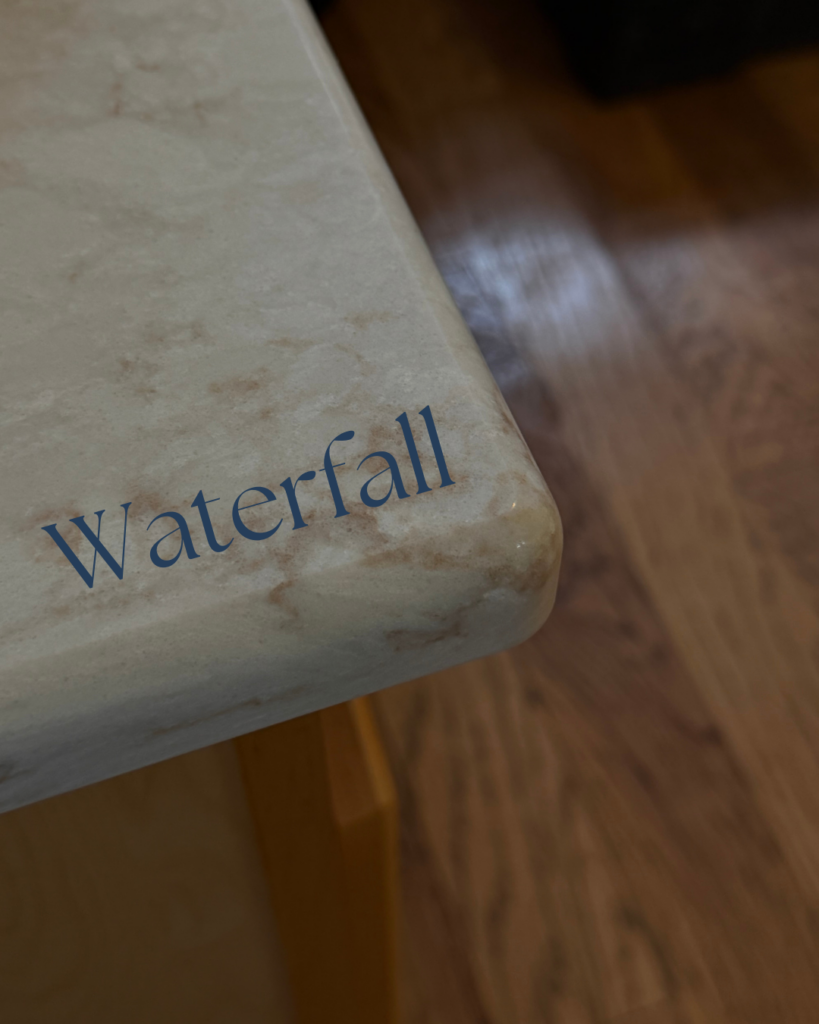
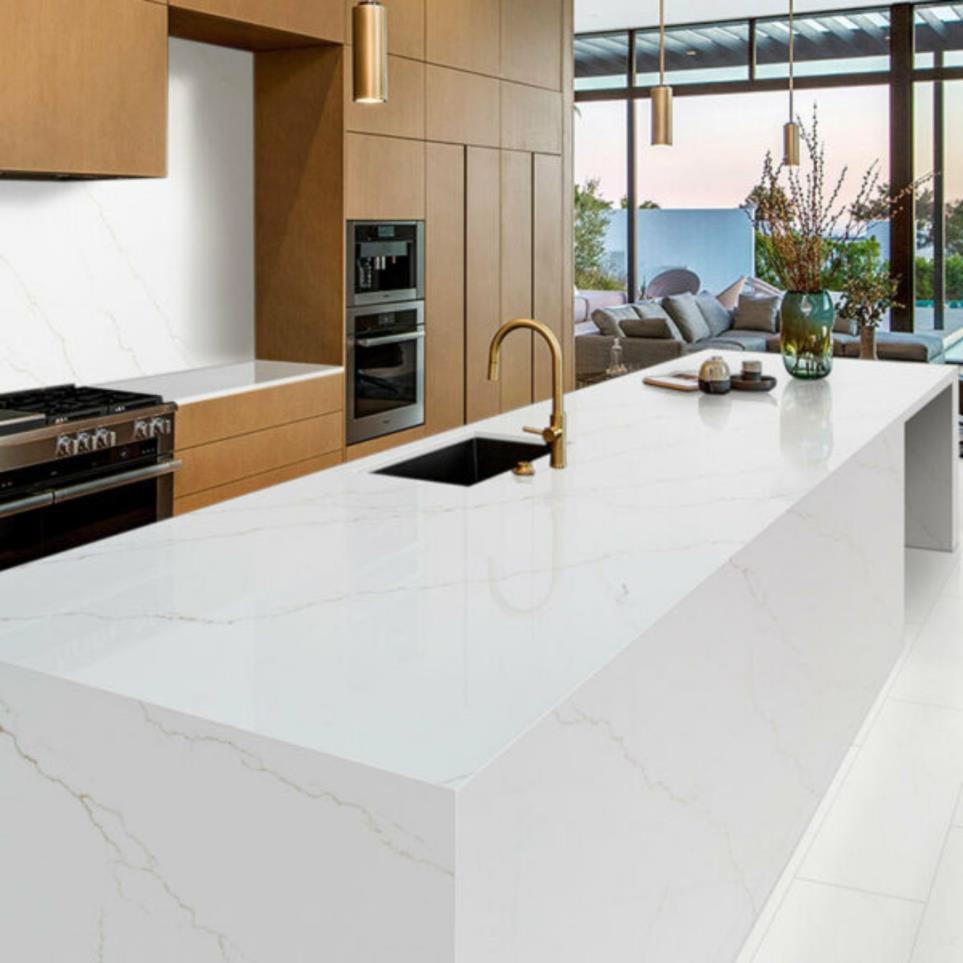
The waterfall edge operates on a completely different premise. Instead of finishing at the countertop face, the stone continues vertically down the full side of the island or cabinetry, creating what appears to be a single uninterrupted sheet of material from countertop to floor. That effect is sculptural, contemporary, and unmistakably intentional.
Choosing this profile means choosing the countertop as the room’s defining feature. Furthermore, the waterfall works best when the stone has enough character to justify the expanded visual surface — a heavily veined quartzite, a bookmatched marble, or a richly colored granite reads dramatically across the vertical panel. Because the corner seam must align cleanly with the countertop’s surface, precise fabrication is essential. Modern Countertops’ team has the experience to match veining across the seam so the stone appears continuous rather than joined.
Why homeowners choose the waterfall edge:
- The single strongest visual statement of any edge profile
- Creates a furniture-like quality that elevates the entire room
- Ideal when the island is visible from multiple angles in an open-plan space
- Best realized with dramatic, pattern-rich stone
Nevertheless, the waterfall requires additional material to cover the vertical panel, and fabrication time is longer. It is the highest-commitment profile of the three — and for the right kitchen, the most rewarding.
Which Edge Fits Which Space?
Room context shapes the right decision as much as personal taste does. Matching countertop edge profiles to the right room — kitchen, bathroom, or outdoor — narrows the options quickly. For kitchen countertops, all three profiles appear regularly. Eased and pencil edges tend to work on perimeter counters where practicality matters most, while the waterfall is reserved for islands where the profile becomes part of the room’s design story.
In bathrooms, eased and pencil dominate. The waterfall edge appears occasionally on floating vanities in contemporary bathrooms, but the smaller cabinet scale makes the dramatic vertical drop harder to justify visually. For outdoor countertop surfaces, eased profiles tend to perform best — the clean, tight profile resists debris accumulation along the edge face.
How to Choose Your Countertop Edge Profile
Match the Edge to the Cabinet Style
Choosing between countertop edge profiles gets easier when you start with the cabinetry. Flat-panel and Shaker styles read best alongside eased and pencil edges, where the clean geometry of cabinet and countertop reinforce each other. Traditional raised-panel cabinetry can carry more decorative profiles, though all three of these popular options work across cabinet styles.
Let the stone guide the decision
A quiet, uniform quartz or solid-color granite often looks sharpest with an eased or pencil finish — the stone stays clean and the profile stays invisible. A heavily veined quartzite or bookmatched marble, on the other hand, justifies the waterfall’s additional stone exposure. Viewing completed projects in the gallery helps translate these principles into real rooms.
Consider daily use
Families with young children often choose eased or pencil profiles specifically because there are no decorative grooves or recesses that collect food and crumbs. The smoother and simpler the edge, the easier the cleanup — a factor that matters every single day over the life of the countertop.
Frequently Asked Questions About Countertop Edge Profiles
Which countertop edge profile is the easiest to maintain?
Among all countertop edge profiles, the eased edge is the simplest to maintain. Its minimal profile has no grooves or decorative curves where food and debris can collect. A single wipe keeps it clean. The pencil edge is nearly as easy, with only a gentle curve at the top corner. A waterfall edge adds a vertical panel that requires regular cleaning along the full exposed side of the island.
Does the edge profile choice affect how thick my countertop looks?
Yes — significantly. The pencil and eased edges allow the true slab thickness to read clearly, which makes a 3 cm slab appear exactly as it is. The waterfall edge makes the island appear considerably thicker and heavier because the vertical panel shows the full depth of the stone alongside the cabinetry. If you want your countertop to appear thicker without using a thicker slab, a mitered edge or laminated edge can achieve that — ask the Modern Countertops team during your consultation.
Can I use different countertop edge profiles in the same kitchen?
Yes, and many homeowners do. A common combination is the eased or pencil edge on perimeter countertops and the waterfall profile on the island, giving the island its own presence while keeping the rest of the kitchen clean and consistent. Modern Countertops can walk you through which combinations work visually for your specific layout and stone choice.
The Edge That Completes the Stone
Ultimately, the best countertop edge profiles are the ones that disappear into the design — chosen so well that the surface feels inevitable rather than decided. Whether that means the effortless geometry of an eased edge, the light-catching refinement of a pencil profile, or the sculptural drama of a waterfall, the right choice always comes from understanding the stone, the space, and how the two interact.
Exploring different countertop edge profiles is easiest with physical samples and real project photos in front of you. Modern Countertops works with homeowners across Springfield, Peoria, Bloomington, Champaign, and the rest of Central Illinois to make these decisions with confidence. Get a quote to start your project, or explore the full edge profiles gallery to see every available option on real completed countertops.