
If you’ve spent any time scrolling through kitchen renovation photos or standing in a showroom trying to pick between slabs, you’ve probably asked the question: granite or quartz? Both materials look great, both perform well, and both can handle everything from cookie baking marathons to coffee spills. So how do Springfield homeowners actually choose? The answer comes down to a few key differences in how each material is made, how it behaves in real life, and what kind of upkeep you’re willing to commit to.
At Modern Countertops, we walk clients through this decision almost every day. And honestly, there’s no wrong answer. The choice comes down to your lifestyle, your design goals, and what you want from your countertops five or ten years down the road. Whether you’re drawn to the unique character of natural stone or prefer the reliability of engineered quartz, understanding the real differences (not just the marketing) will help you land on the material that fits your home best.
How Granite and Quartz Are Actually Made
Granite starts deep underground. It forms when molten rock cools over millions of years, creating swirling patterns of minerals like feldspar, mica, and quartz crystals. Each slab is cut from a quarry, polished, and shipped to fabricators. Because it’s a natural stone cut from the earth, no two granite slabs are identical. The variation is part of the appeal, but it also means you need to pick your exact slab in person if consistency matters to you.
Quartz countertops take a different route. They’re engineered stone made from quartz particles (usually around 90 to 95 percent) mixed with resins and pigments. The result is a manufactured product with more consistent colors and patterns. If you want a white countertop that looks uniform from one end of your kitchen to the other, quartz delivers that predictability. It’s also why quartz can mimic looks that granite can’t, like solid matte blacks or soft concrete-style grays.
Maintenance: Sealing vs Set-and-Forget
Here’s where the two materials split pretty clearly. Granite requires periodic sealing, usually once a year depending on the specific stone and how much use it sees. The sealant fills the tiny pores in the surface and keeps liquids from soaking in. When sealed properly, granite offers good stain resistance. Skip the sealing, though, and that glass of red wine or puddle of olive oil might leave a mark.
Quartz countertops in Springfield IL require no sealing at all. The resin binder makes the surface non-porous, so spills sit on top instead of sinking in. That gives quartz excellent stain resistance right out of the gate. For busy families or anyone who doesn’t want to add “reseal countertops” to the annual to-do list, quartz removes one maintenance task entirely.
Which One Handles Heat Better?
Both materials handle everyday kitchen heat without issue, but granite has a slight edge here. As a natural stone, it tolerates hot pans better than quartz. That said, neither material loves a scorching cast iron skillet dropped directly on the surface. Trivets are still your friend. Quartz can discolor or crack under extreme heat because of the resin content, so it’s worth being a little more cautious.
What Do Granite Countertops in Springfield IL Really Look Like?
Granite brings a sense of place to your kitchen. Because it’s quarried from specific regions (Brazil, India, Norway, and others), each stone tells a geographic story. You might see dramatic black and gold veining, soft gray and white speckles, or warm browns with rust-colored mineral deposits. The natural variation means your countertop will have its own personality, sometimes with unexpected veins or crystal pockets that catch the light.
That uniqueness appeals to homeowners who want their kitchen to feel one of a kind. But it also means you need to be comfortable with a little unpredictability. If you’re the type who likes everything to match perfectly, granite might feel too wild. For others, that’s exactly the charm.
What About Quartz?
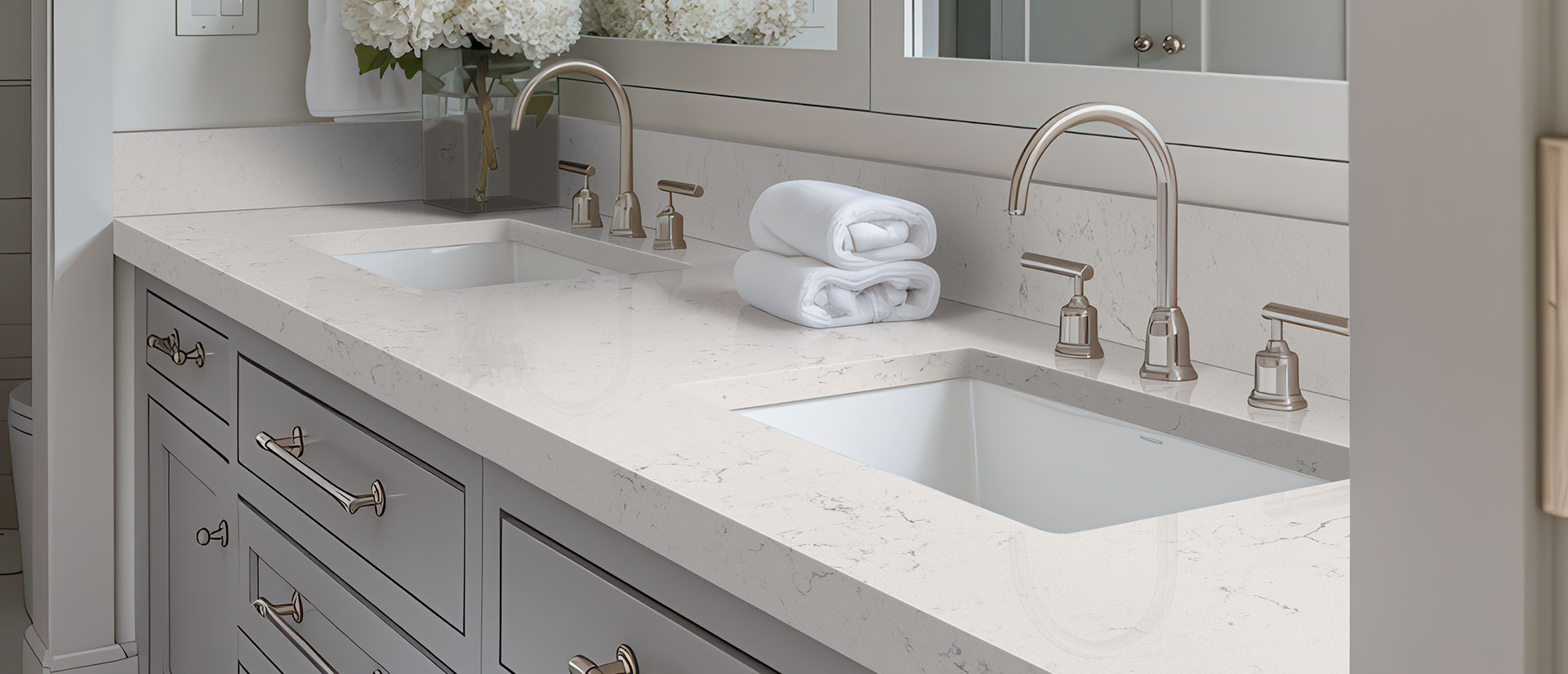
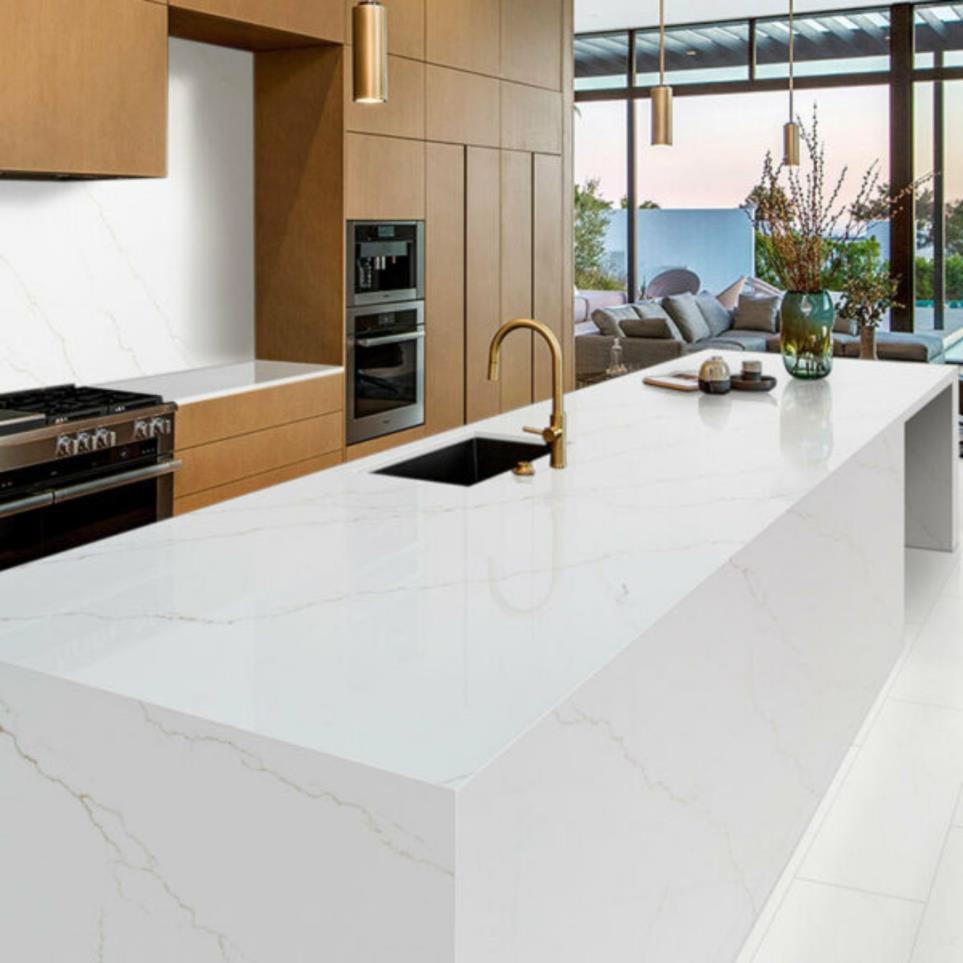
Quartz offers control. Because it’s manufactured, you can preview exactly what your finished countertop will look like. The slab you see in the showroom is what you’ll get at home, without surprise veining or color shifts. That consistency makes quartz a favorite for modern and contemporary kitchens where clean lines and uniform surfaces matter.
Quartz also opens up design possibilities that granite can’t match. Want a pure white countertop with zero variation? Quartz can do that. Prefer something that mimics marble or concrete without the maintenance baggage? Quartz delivers those looks too. The range of available patterns has grown so much in recent years that quartz now covers nearly every aesthetic, from traditional to ultra-modern.
Which Material Holds Up Better Over Time?
Both granite and quartz are durable enough to last decades. Granite is scratch resistant and tough, though it can chip if you drop something heavy on a corner or edge. Quartz is similarly hard, but the resin can make it slightly more prone to scratching from sharp knives if you use the countertop as a cutting board (which you shouldn’t do with either material).
According to the Natural Stone Institute, both materials rank high for durability in residential kitchens, with proper care extending their lifespan well beyond typical remodel cycles. The difference comes down to how each material ages. Granite develops a patina over time, sometimes deepening in color as oils from cooking settle into the surface. Quartz stays more static, looking the same in year ten as it did on installation day.
How Do They Compare for Resale Value?
Both granite and quartz are considered premium materials by homebuyers. In Springfield, Illinois and across the Midwest, either choice signals a quality kitchen. Granite still carries a certain prestige because of its natural origin, but quartz has gained ground rapidly as buyers recognize its low-maintenance benefits. If resale is part of your decision, either material will serve you well. The style and condition of the installation matter more than the material itself.
Can You Get the Same Edge Profiles and Finishes with Both?
Yes. Aesthetically, granite and quartz are equally versatile. Nearly any countertop edge, finish, or design detail can be created with either material. Want an ogee edge for a traditional kitchen? Both work. Prefer a clean, straight edge for a modern space? Also fine. Polished, honed, or leathered finishes are available for both, though some exotic granites look particularly striking with a honed or textured finish that brings out the stone’s natural depth.
The fabrication process is nearly identical for both materials, so your choice of edge profile or finish won’t limit your material options. That’s good news if you’re trying to match a specific look or coordinate with existing cabinetry and backsplash.
Which One Should You Choose?
Granite countertops in Springfield IL make sense if you want a natural stone with unique character and don’t mind a little annual upkeep. Choose granite when you love the idea of a one-of-a-kind surface, appreciate natural variation, and want a material that’s been used in homes for generations.
Pick quartz countertops in Springfield IL if you want predictable color and pattern, prefer a no-sealing maintenance routine, and value consistency across your entire countertop run. Quartz fits modern lifestyles where ease of care and clean design are top priorities.
Either way, you’re getting a durable, beautiful surface that will serve your family well for years. The best choice is the one that fits how you actually live in your kitchen. If you’re ready to see both materials in person and talk through which one suits your project, reach out to Modern Countertops. We’ll walk you through the pros and cons without the sales pitch, and help you pick the countertop that works for your home.