

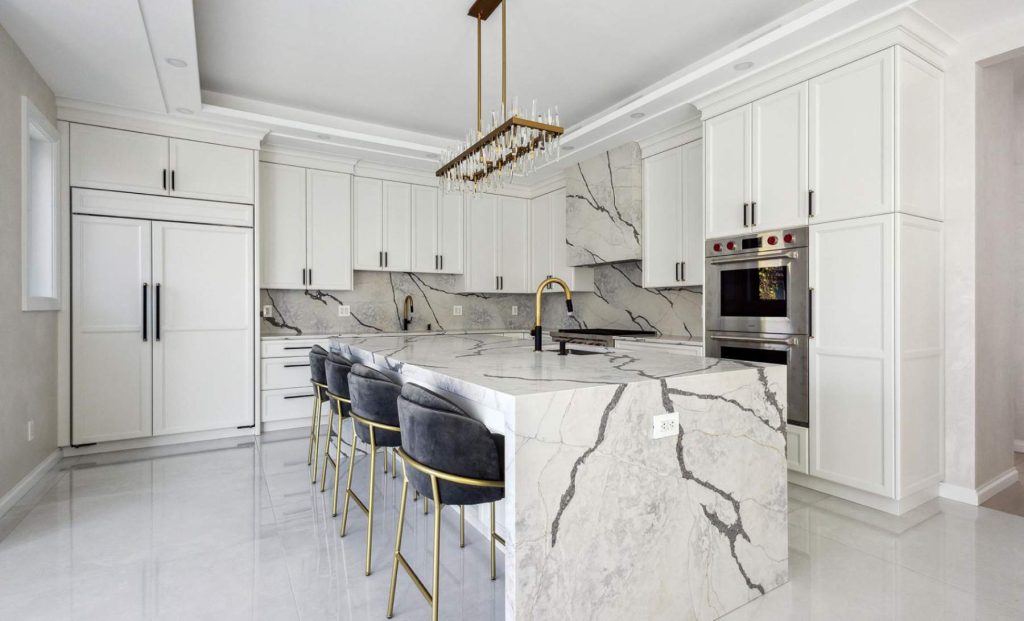
Waterfall countertops have become one of the most recognizable features in modern kitchen design. Instead of stopping at the edge of the cabinet, the countertop material continues vertically down the side of the island or cabinetry, creating a continuous “waterfall” effect. While this style is visually striking, many homeowners still wonder whether waterfall kitchen countertops are actually practical—or simply a design trend. The answer depends on how the space is used, the countertop material selected, and the overall kitchen layout. According to the 2024 U.S. Houzz Kitchen Trends Study, large kitchen islands continue to rank among the most requested remodeling features in renovated kitchens, helping drive interest in statement countertop designs such as waterfall edges. For homeowners planning open-concept kitchens, waterfall installations are often considered both a design and functional upgrade.

What Is a Waterfall Countertop?
A waterfall countertop extends the countertop material vertically down one or both sides of an island, cabinet run, or vanity. This creates a continuous surface from the top edge to the floor. Waterfall edges are commonly created using:
- Quartz countertops
- Granite countertops
- Quartzite Marble
- Porcelain slabs
The design is especially popular in:
- contemporary kitchens
- Luxury remodels
- Open-concept spaces
- Large kitchen islands
Unlike standard countertop edges, waterfall installations place more emphasis on slab continuity, seam planning, and overall fabrication quality. Homeowners exploring different countertop layouts often compare waterfall designs alongside traditional island configurations and edge profiles when selecting the best countertop for their kitchen layout at modern Countertops.
Pros of Waterfall Countertops
Strong Visual Impact
The biggest advantage of waterfall countertops is their appearance. They create a clean, architectural look that instantly becomes a focal point in the kitchen.
In homes with open floor plans, waterfall edges can also help visually define the kitchen area without adding walls or barriers.
Added Surface Protection
A waterfall edge protects the exposed cabinet sides from:
- scratches
- impacts
- moisture
- scuff marks from foot traffic
This can be especially useful in homes with children, pets, or heavily used kitchen islands.
Highlights Natural Stone Patterns
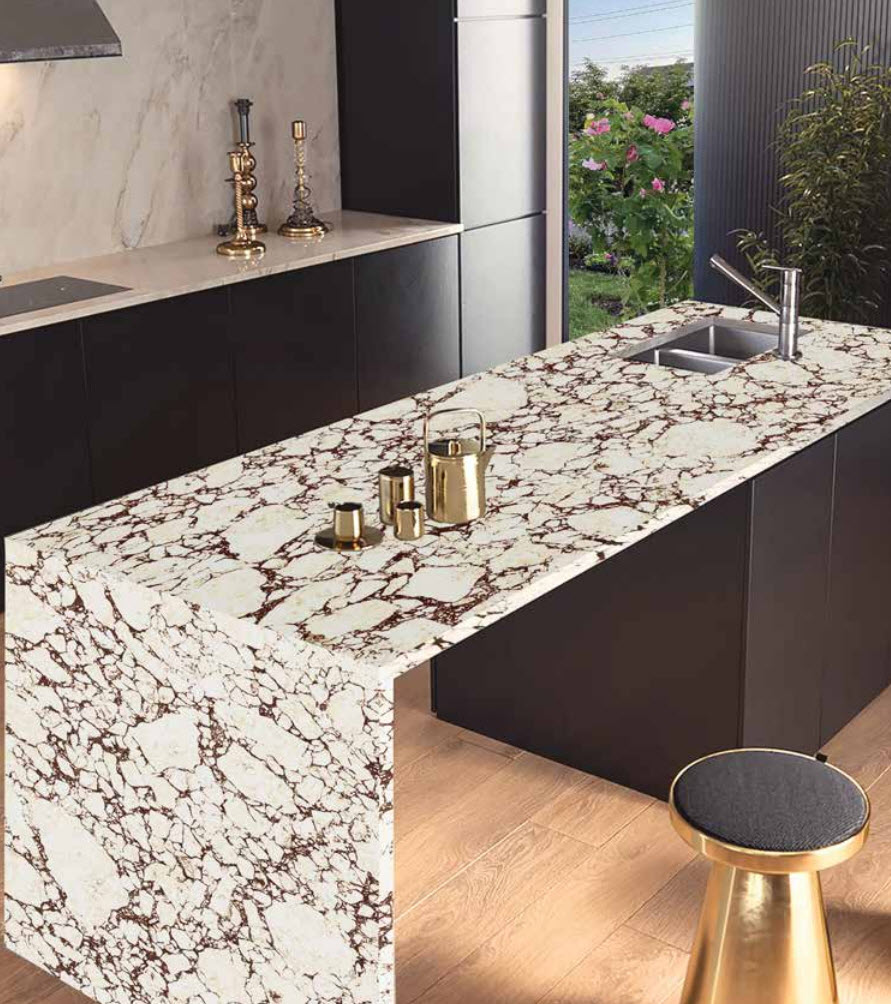
Materials like granite countertops and quartzite often contain dramatic veining or movement. A waterfall edge allows those patterns to continue vertically, creating a more cohesive and premium appearance.
Bookmatched slabs or carefully aligned veining can make the installation feel custom and highly intentional.
Highlights Natural Stone Patterns
While often associated with contemporary design, waterfall edges can also complement transitional kitchens when paired with warmer stone tones or softer cabinetry. Many homeowners choosing kitchen countertops today are looking for designs that feel updated without appearing overly trendy. Waterfall islands can achieve that balance when proportioned correctly.
Cons of Waterfall Countertops
Higher Material & Fabrication Costs
One of the biggest drawbacks is cost. Because the countertop material extends vertically, waterfall designs require:
- larger slabs
- additional fabrication
- more installation labor
- detailed seam alignment
For natural stone, this can significantly increase project pricing depending on slab size and material availability.
Seam Placement Matters
A poorly planned seam can reduce the visual effect of a waterfall edge. This is particularly important with heavily veined materials.
Professional fabrication and slab planning become much more important compared to standard countertop installations.
Not Every Kitchen Layout Benefits
In smaller kitchens, waterfall edges can sometimes feel visually heavy or reduce design flexibility.
They generally work best when:
- the island is visible from multiple angles
- the kitchen has open sightlines
- there is enough surrounding space for the feature to stand out
Repairs Can Be More Complicated
If the vertical section becomes chipped or damaged, repairs may be more difficult compared to standard countertop edges.
This is another reason material selection matters. Durable surfaces like quartz or dense granite tend to perform better long term in high-traffic kitchens.
When Waterfall Countertops Make the Most Sense
Open-Concept Kitchens
Waterfall edges often work best in open layouts where the island acts as both a workspace and visual centerpiece.
In these kitchens, the waterfall design helps anchor the room and create a cleaner transition between living spaces.
Homes With Large Kitchen Islands
Longer islands allow the design to feel intentional rather than crowded. The larger the visible slab surface, the greater the visual impact.
Minimalist or Modern Designs
Clean cabinetry, slab backsplashes, and simple hardware pair especially well with waterfall countertops. According to the National Kitchen & Bath Association (NKBA) Kitchen Trends Report, homeowners continue prioritizing larger islands and integrated kitchen features in modern remodels—two design trends that align closely with waterfall countertop installations.
Homes Prioritizing Long-Term Design Value
While waterfall countertops are trend-forward, they have also become more established in upscale residential design over the past decade.
When executed properly using timeless materials and balanced layouts, they often age better than highly decorative countertop styles.
Best Materials for Waterfall Countertops
Quartz
Quartz waterfall countertops are among the most popular because they: provide consistent patterning simplify seam matching require low maintenance They work especially well in contemporary kitchens.
Granite
Granite waterfall countertops offer more natural variation and depth. They are ideal for homeowners who prefer authentic stone character and stronger movement patterns.
Quartzite
Quartzite combines dramatic natural appearance with strong durability, making it a popular premium choice for waterfall islands.
Porcelain
Large-format porcelain slabs are increasingly being used for thin-profile waterfall designs due to their sleek appearance and stain resistance.
Are Waterfall Countertops Worth It?
For many homeowners, the answer is yes—especially when the kitchen layout supports the design.
Waterfall countertops can:
- elevate the visual impact of a kitchen
- protect exposed cabinetry
- create a more custom appearance
- increase perceived design quality
However, they also require thoughtful planning, careful fabrication, and the right material selection to truly make sense for the space.
Homeowners considering waterfall installations should evaluate:
- kitchen size
- island visibility
- material performance
- budget
- long-term design goals
When those factors align, waterfall countertops can become one of the most distinctive and functional features in a kitchen remodel.




